

If you are developing product packaging for a new business, private-label product or retail launch, there is one uncomfortable question worth asking before anything goes to print:
“Does this look a bit too much like somebody else’s product?”
Most businesses do not deliberately copy competitors.
Usually, what happens is more subtle. A founder sends a designer a few “reference” products. Someone says they want the packaging to feel “clean and premium”. A mood board appears. A few colours get borrowed from one brand, a layout from another, and before long everyone is looking at packaging that feels… familiar.
That issue recently landed Aldi in the Federal Court in a copyright dispute involving children’s snack packaging. Aldi was ultimately found to have infringed copyright in packaging used for a competing snack product. The key takeaway for businesses was simple: Packaging does not need to be identical to create legal risk.
Whether you are launching a startup brand, importing products, creating supermarket private-label packaging, or refreshing existing branding, packaging can create intellectual property risks if it gets too close to a competitor’s branding.
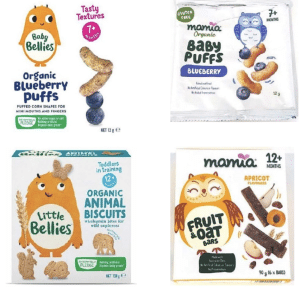
Selected comparison images reproduced from Hampden Holdings I.P. Pty Ltd v Aldi Foods Pty Ltd [2024] FCA 1452.
Packaging Can Infringe More Than Just Trade Marks
A lot of businesses assume packaging law is mainly about logos and registered trade marks.
It is not.
- Product packaging may potentially be protected by:
copyright law; - registered trade marks;
- misleading or deceptive conduct laws; and passing off.
That means businesses can face copyright infringement or trade mark infringement claims even where they have not directly copied a competitor’s business name.
For example, copyright may protect:
- illustrations;
- graphic artwork;
- label designs; and original artistic works used on packaging.
Importantly, copyright protection in Australia arises automatically. There is no copyright registration system.
Copyright Infringement Does Not Require Exact Copying One of the most common reactions businesses have is:
“But ours isn’t exactly the same.”
Sometimes that is enough.
Sometimes it is not.
Under Australian copyright law, infringement can occur where a “substantial part” of an original work has been reproduced.
Changing the font, background colour or placement of graphics will not automatically eliminate risk if the overall visual impression still appears heavily derived from the original packaging.
This is particularly relevant in industries such as:
- food and beverage products;
- cosmetics;
- supplements; and supermarket private-label goods.
The Real Risk Often Starts During The Design Process
Many packaging disputes begin long before products reach shelves.
A business tells a designer:
“We want something in this style.”
Or:
“We want customers to instantly understand the category.”
Those are reasonable commercial objectives.
But intellectual property risks increase when similarities begin stacking up across:
- colours;
- layouts;
- typography;
- illustration styles; and overall presentation.
Private Label Packaging Requires Particular Care
Consumers expect products within the same category to feel visually familiar. But getting too close to a competitor’s packaging can create copyright and trade mark infringement risks.
Courts generally understand that businesses within the same industry will share common visual conventions. But they also tend to look sceptically at packaging that appears designed to evoke a competitor’s product too closely.
A useful practical question is: “If these products appeared side-by-side on a shelf, would ordinary consumers immediately notice the similarities?”
If the answer is yes, it may be worth obtaining legal advice before launch. Preferably before printing 50,000 units.
Final Thoughts
Good packaging should attract customers.
It should not attract copyright infringement claims.
If your business is developing packaging, launching products or refreshing branding, obtaining legal advice early can significantly reduce intellectual property risk.
Want to stay up to date?
Get the latest updates straight into your inbox
Subscribe